
As the days grow shorter and the trees shed their final leaves, I've been thinking about how differently nature and human beings approach this time of year.
The trees aren't trying to produce more leaves. The garden isn't worried about being productive. Nature seems to understand that every season has its own rhythm.
But we humans often expect ourselves to maintain the same pace all year long.
We keep working, organizing, planning, caring for others, and adding more to our schedules, even as the world around us is slowing down.
In Five Element Chinese Medicine, this transition from autumn to winter offers a wonderful opportunity to reflect on how we use our energy and what our bodies might be asking of us.
Autumn's Metal Element: What Are You Ready to Release?
In Traditional Chinese Medicine, autumn is associated with the Metal element, the Lungs and Large Intestine, and the themes of letting go, discernment, and reflection.
Think about the trees releasing their leaves. They aren't holding on to what they no longer need.
The Metal element invites us to consider similar questions in our own lives.
What is still meaningful to us? What have we outgrown? What responsibilities, expectations, or habits are we ready to release?
Of course, letting go isn't always easy.
Sometimes we're holding on to obligations because we care deeply about the people or causes involved. Sometimes we've simply become accustomed to being busy.
And sometimes slowing down means confronting feelings we've been too occupied to notice.
The Metal season reminds us that making room for something new often begins with releasing something else.
Winter's Water Element: The Wisdom of Rest
As autumn gives way to winter, we enter the season associated with the Water element.
In Five Element theory, Water is connected with the Kidneys and Bladder and symbolizes restoration, reserves, adaptability, and the capacity to move through uncertainty.
Think about what happens beneath the surface during winter.
Although the landscape may appear quiet, important processes continue. Roots remain alive. Energy is conserved. The groundwork for spring is being laid.
Rest isn't the opposite of growth. Sometimes it's what makes growth possible.
Yet many of us struggle to give ourselves permission to rest.
We feel guilty when we're not accomplishing something. We fill our weekends with errands. Even our self-care routines can become another obligation.
I think there's something valuable in remembering that we don't have to be productive every moment of the day.
When Stress Shows Up in the Body
In my Evanston acupuncture practice, I often see how the demands of everyday life affect physical well-being.
Stress can show up in ways we don't always immediately recognize:
-
Tight shoulders and neck muscles
-
Jaw clenching
-
Headaches
-
Digestive discomfort
-
Difficulty falling or staying asleep
-
Feeling exhausted but unable to relax
From a Traditional Chinese Medicine perspective, we consider how these symptoms fit into a person's overall pattern of health.
In conventional medical terms, prolonged stress can influence muscle tension, sleep, digestion, and the body's physiological stress response.
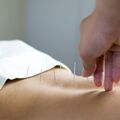
Acupuncture may help some people manage stress-related symptoms and promote relaxation. Research into acupuncture for sleep and anxiety is encouraging in some areas, although study quality varies and more rigorous research is needed.
For chronic insomnia, cognitive behavioral therapy for insomnia (CBT-I) remains the recommended first-line treatment. Acupuncture can be considered as a complementary approach rather than a replacement for established care.
My goal is always to meet each patient where they are and develop an individualized treatment plan.
Five Ways to Honor the Transition Into Winter
You don't need to completely change your routine to begin living more in harmony with the season.
Here are a few practices worth considering.
1. Give yourself more breathing room
Look at your calendar. Is there something you can postpone, delegate, or simply decide not to do?
Sometimes the most restorative thing we can do is create space.
2. Establish an evening wind-down routine
Dim the lights, step away from screens, read a book, or enjoy a warm bath.
A consistent routine can help signal to your body that the day is ending.
3. Keep moving, but listen to your energy
Movement remains important throughout the colder months.
Walking, Pilates, stretching, dancing, or whatever movement you enjoy can support your well-being.
The goal isn't necessarily to do more. It's to find movement that feels sustainable.
4. Spend time outdoors
Even as temperatures drop, a walk outside can provide fresh air, daylight, and an opportunity to reconnect with the natural world.
Notice how the landscape is changing.
What might it be teaching you about your own rhythms?
5. Make room for things that nourish you
For me, that might mean Pilates, spending time with friends, taking a walk, or settling in with a good movie.
These experiences aren't distractions from a meaningful life.
They're part of what makes life meaningful.
Caring Deeply Without Carrying Everything
One thing I've been reflecting on lately is how to balance caring about the world with caring for ourselves.
Between running my acupuncture practice, participating in community organizing, and keeping up with what's happening around us, there can be a feeling that there's always something more to do.
And often, there is.
But I'm learning that caring deeply doesn't mean we have to be available to everything, all the time.
We can remain engaged, compassionate, and committed while also recognizing our need for rest.
Perhaps that's one of the most important lessons of the transition from Metal to Water.
We don't have to abandon what matters to us.
We simply need to remember that our energy is worth protecting, too.
An Invitation to Slow Down
As we approach winter, I invite you to consider one question:
What would it look like to work with your body's natural rhythms rather than constantly pushing against them?
Maybe it means getting to bed earlier.
Maybe it means leaving one evening unscheduled.
Maybe it means finally addressing the headaches, tension, or restless sleep you've been experiencing.
If you're interested in exploring how acupuncture might support your well-being during this seasonal transition, I'd be happy to work with you.
Lisa Meyerson, L.Ac.
Lisa Meyerson Acupuncture
Heartwood Center
1818 Dempster Street, Evanston, IL
Schedule an appointment:
https://lisameyersonacupuncture.janeapp.com/
Lisa Meyerson
Contact Me